Skip to content
Adaptive

Learn British Literature — Metaphysical conceit, Modernism wrote (extended)

Read the notes, then try the practice. It adapts as you go.When you're ready.

Session Length

~14 min

Adaptive Checks

13 questions

Transfer Probes

7

Lesson Notes

British literature encompasses the rich tradition of literary works written in English by authors from the British Isles, spanning from the Anglo-Saxon period to the present day. Beginning with the Old English epic Beowulf and continuing through the medieval works of Geoffrey Chaucer, the Renaissance dramas of William Shakespeare, and the Romantic poetry of Wordsworth and Keats, British literature has shaped the development of the English language and influenced literary traditions worldwide. The canon reflects centuries of social, political, and cultural transformation across England, Scotland, Wales, and Ireland.

The study of British literature reveals the evolution of literary forms and movements that have defined Western literary culture. The Elizabethan and Jacobean periods produced unparalleled achievements in drama and poetry, while the eighteenth century saw the rise of the novel through writers like Daniel Defoe, Samuel Richardson, and Henry Fielding. The Victorian era brought social realism and moral inquiry through the works of Charles Dickens, George Eliot, and Thomas Hardy, and the Modernist movement of the early twentieth century, led by Virginia Woolf, James Joyce, and T.S. Eliot, radically reimagined narrative structure, consciousness, and poetic form.

Today, British literature remains a vital field of study that connects readers to enduring questions about identity, class, empire, gender, and the human condition. Contemporary British authors such as Kazuo Ishiguro, Zadie Smith, and Hilary Mantel continue to expand the boundaries of the tradition, while postcolonial perspectives have enriched and complicated the canon. Understanding British literature provides essential context for appreciating the development of the English language, the history of ideas, and the power of storytelling across cultures.

You'll be able to:

  • Identify major periods in British literature from Anglo-Saxon verse through contemporary postcolonial writing
  • Analyze the narrative structures, poetic forms, and thematic concerns of canonical British literary works
  • Compare how British authors across centuries have engaged with empire, class, gender, and national identity
  • Evaluate literary criticism and theoretical approaches applied to British texts including new historicism and deconstruction

One step at a time.

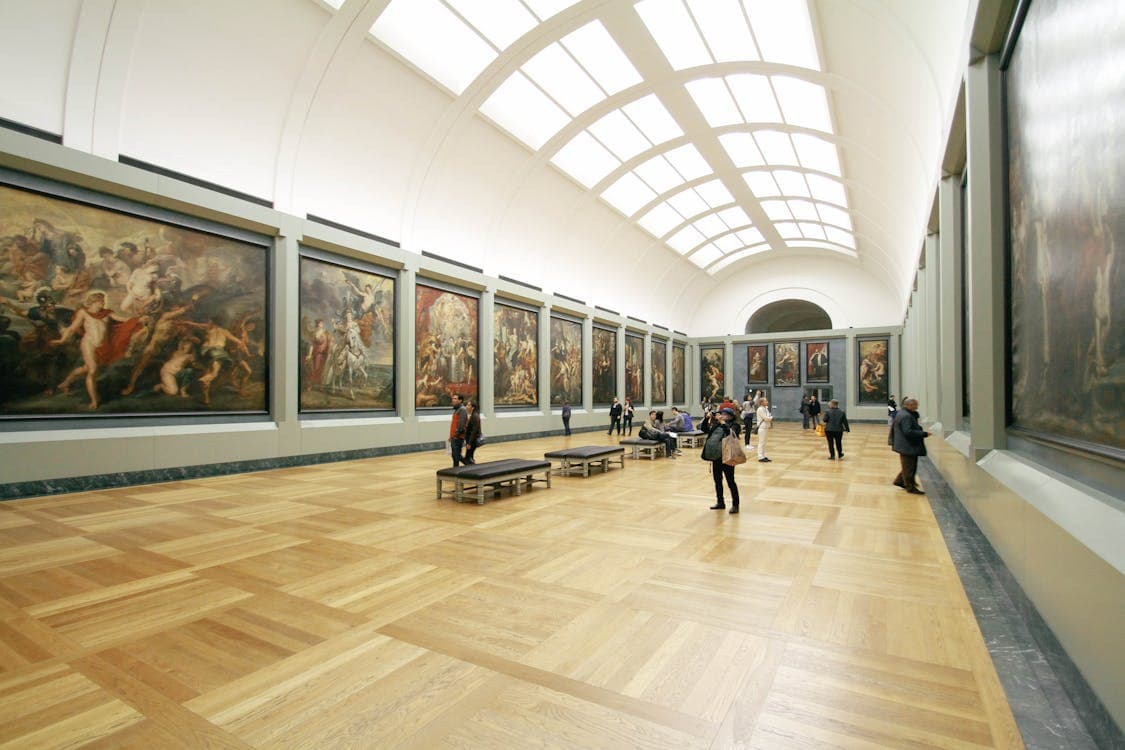
Library with British literary classics
Centuries of British storytellingPexels

Key Concepts

The Shakespearean Canon

The body of 37 plays, 154 sonnets, and narrative poems attributed to William Shakespeare (1564-1616), widely considered the greatest writer in the English language. His works span comedy, tragedy, history, and romance, and they explore universal themes of ambition, love, jealousy, mortality, and political power.

Example: Hamlet explores the psychology of indecision and revenge, Macbeth dramatizes the corrupting effects of unchecked ambition, and A Midsummer Night's Dream blends fairy magic with romantic comedy.

The Rise of the English Novel

The emergence of the novel as a dominant literary form in eighteenth-century Britain, characterized by extended prose fiction with realistic characters and social settings. Daniel Defoe, Samuel Richardson, and Henry Fielding are considered pioneering novelists who established conventions of plot, character development, and narrative perspective.

Example: Daniel Defoe's Robinson Crusoe (1719) is often cited as one of the first English novels, using a first-person autobiographical style to tell a realistic survival story.

Romanticism

A literary and artistic movement of the late eighteenth and early nineteenth centuries that emphasized emotion, imagination, individualism, and the beauty of nature over the rationalism and order of the Enlightenment. Key British Romantic poets include William Wordsworth, Samuel Taylor Coleridge, Lord Byron, Percy Bysshe Shelley, and John Keats.

Library with classic British literary works

Example: Wordsworth and Coleridge's Lyrical Ballads (1798) is considered the founding text of English Romanticism, featuring poems in everyday language about nature and common life.

Victorian Realism

The dominant literary mode of the Victorian era (1837-1901), characterized by detailed depictions of everyday life, social criticism, moral seriousness, and complex multi-plot narratives. Victorian novelists used fiction to examine class inequality, industrialization, gender roles, and the tensions of a rapidly changing society.

Example: Charles Dickens's Bleak House uses the Chancery court system as a symbol of institutional failure, weaving together dozens of characters across social classes to expose injustice.

Modernism in British Literature

An early twentieth-century movement that broke with traditional forms and conventions, experimenting with stream of consciousness, fragmented narrative, multiple perspectives, and symbolic complexity. British and Irish Modernists responded to the disillusionment of World War I and the collapse of Victorian certainties.

Example: Virginia Woolf's Mrs Dalloway (1925) follows a single day in London using stream of consciousness to move fluidly between characters' inner thoughts and memories.

The Metaphysical Poets

A group of seventeenth-century poets, including John Donne, George Herbert, Andrew Marvell, and Henry Vaughan, known for their intellectual wit, elaborate conceits, paradoxes, and explorations of love, religion, and mortality. Their work blends emotional intensity with logical argumentation.

Example: John Donne's 'A Valediction: Forbidding Mourning' compares two lovers' souls to the legs of a compass, using this extended metaphysical conceit to argue that physical separation cannot break spiritual unity.

Gothic Literature

A genre originating in the late eighteenth century that combines elements of horror, death, the supernatural, and romance, often set in medieval or decaying architectural settings. British Gothic literature explores the boundaries between reason and madness, the natural and the supernatural.

Example: Mary Shelley's Frankenstein (1818) uses Gothic conventions to explore the dangers of unchecked scientific ambition, while Bram Stoker's Dracula (1897) examines Victorian anxieties about sexuality and foreign invasion.

Iambic Pentameter and Sonnet Form

Iambic pentameter is a metrical pattern of five pairs of unstressed and stressed syllables per line, forming the rhythmic backbone of much English poetry and drama. The sonnet is a fourteen-line poem, most commonly in the Petrarchan (octave and sestet) or Shakespearean (three quatrains and a couplet) form.

Example: Shakespeare's Sonnet 18 ('Shall I compare thee to a summer's day?') follows the Shakespearean sonnet structure with three quatrains developing a comparison and a closing couplet that resolves the argument.

More terms are available in the glossary.

Explore your way

Choose a different way to engage with this topic — no grading, just richer thinking.

Explore your way — choose one:

Explore with AI →

Concept Map

See how the key ideas connect. Nodes color in as you practice.

Worked Example

Walk through a solved problem step-by-step. Try predicting each step before revealing it.

Adaptive Practice

This is guided practice, not just a quiz. Hints and pacing adjust in real time.

Small steps add up.

What you get while practicing:

  • Math Lens cues for what to look for and what to ignore.
  • Progressive hints (direction, rule, then apply).
  • Targeted feedback when a common misconception appears.

Teach It Back

The best way to know if you understand something: explain it in your own words.

Keep Practicing

More ways to strengthen what you just learned.

British Literature — Metaphysical conceit, Modernism wrote (extended) Adaptive Course - Learn with AI Support | PiqCue