
Calculus — Math expr, Chain rule (extended)
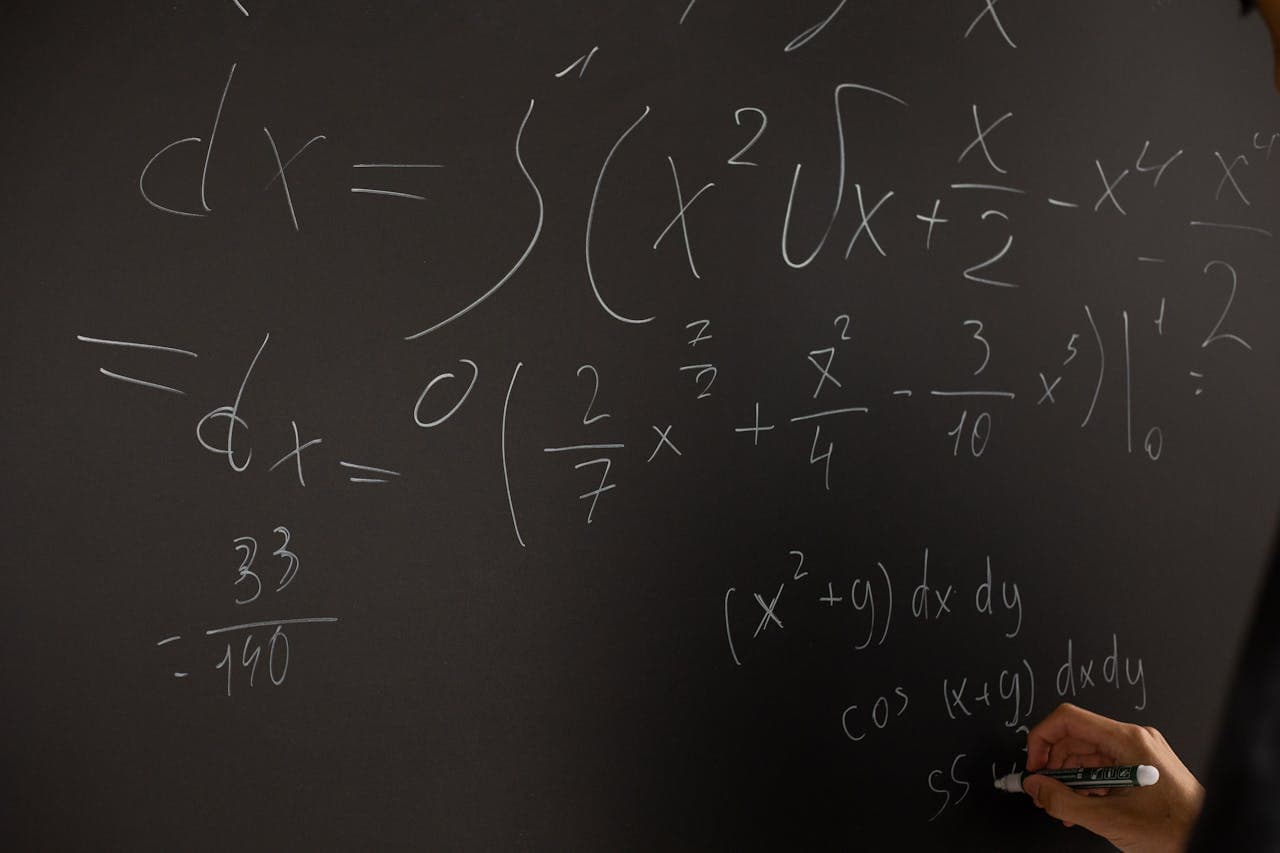
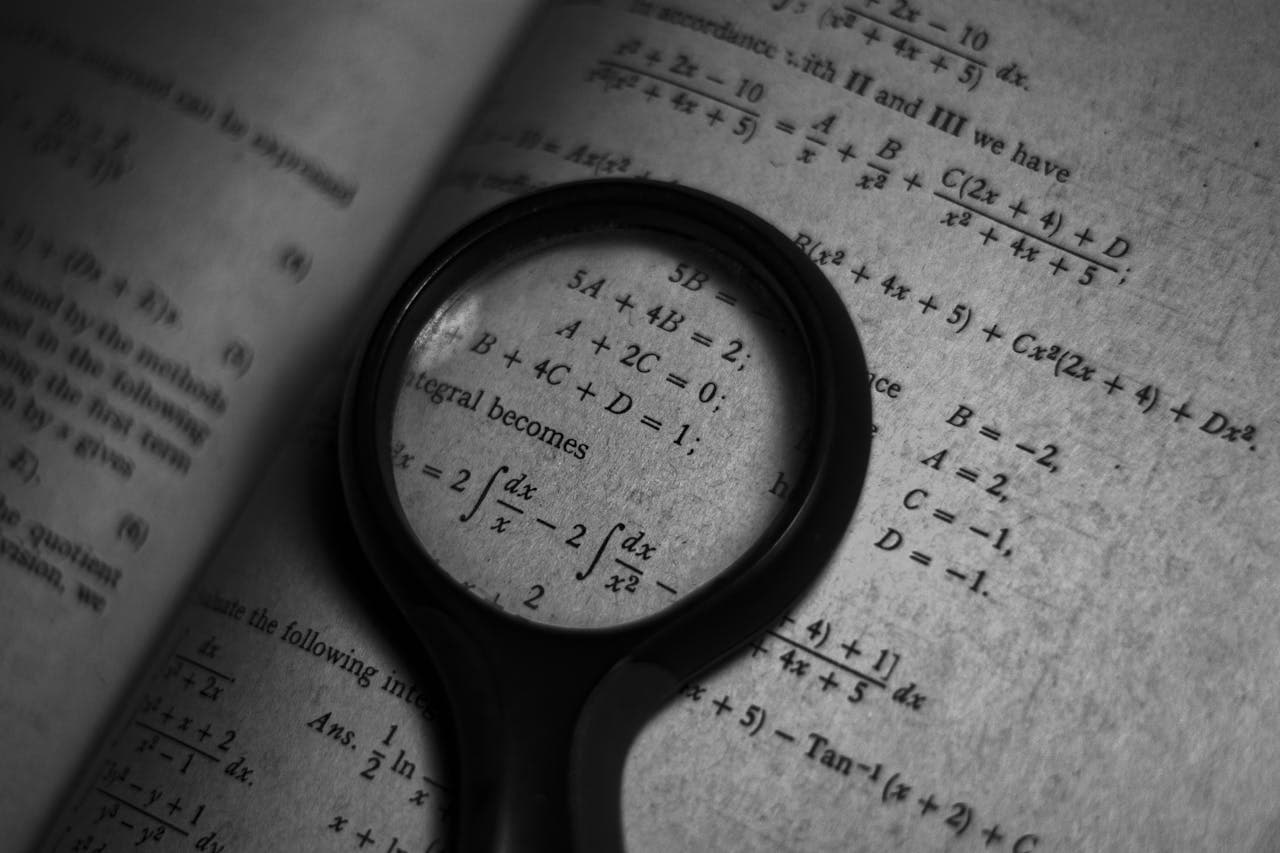
IntermediateCalculus is the mathematical study of continuous change, in the same way that geometry is the study of shape and algebra is the study of generalizations of arithmetic operations. It has two major branches: differential calculus, which concerns instantaneous rates of change and slopes of curves, and integral calculus, which concerns accumulation of quantities and the areas under and between curves. Together, these branches are unified by the Fundamental Theorem of Calculus, one of the most important results in all of mathematics.
Developed independently by Isaac Newton and Gottfried Wilhelm Leibniz in the late 17th century, calculus is one of the most powerful mathematical tools ever created. It provides the language and framework for physics, engineering, economics, computer science, and virtually every quantitative discipline. Key concepts include limits, continuity, differentiation rules, integration techniques, infinite series, and multivariable extensions that generalize these ideas to higher dimensions.
From modeling planetary orbits to optimizing machine learning algorithms, calculus is the mathematical backbone of modern science and technology. Understanding derivatives and integrals unlocks the ability to analyze change, optimize systems, and solve problems that are impossible with algebra alone. Differential equations, which arise naturally from calculus, describe phenomena ranging from population growth and radioactive decay to fluid dynamics and electrical circuits.
Practice a little. See where you stand.
Quiz
Reveal what you know — and what needs work
Adaptive Learn
Responds to how you reason, with real-time hints
Flashcards
Build recall through spaced, active review
Cheat Sheet
The essentials at a glance — exam-ready
Glossary
Master the vocabulary that unlocks understanding
Learning Roadmap
A structured path from foundations to mastery
Book
Deep-dive guide with worked examples
Calculator
Run the numbers and build intuition
Steps
Choose the next step — build procedural reasoning
Key Concepts

One concept at a time.
Explore your way
Choose a different way to engage with this topic — no grading, just richer thinking.
Explore your way — choose one:
More ways to explore
Curriculum alignment— Standards-aligned
Grade level
Learning objectives
- •Explain the concepts of limits, continuity, and the fundamental theorem connecting differentiation and integration
- •Apply differentiation techniques to analyze rates of change, optimization problems, and curve behavior
- •Analyze improper integrals, infinite series, and convergence criteria using rigorous mathematical reasoning
- •Evaluate multivariable calculus applications including gradient fields, line integrals, and optimization with constraints
Recommended Resources
This page contains affiliate links. We may earn a commission at no extra cost to you.
Books
Calculus: Early Transcendentals
by James Stewart
Calculus Made Easy
by Silvanus P. Thompson
Thomas' Calculus
by Joel Hass, Christopher Heil, Maurice Weir
Related Topics
Algebra
The branch of mathematics that uses variables, symbols, and rules for manipulating equations to solve problems and describe general mathematical relationships.
Geometry
The branch of mathematics that studies the properties, measurements, and relationships of shapes, spaces, angles, and dimensions, from basic Euclidean principles to advanced non-Euclidean and computational applications.
Physics
Physics is the study of matter, energy, and the fundamental forces of nature, encompassing everything from the motion of everyday objects to the behavior of subatomic particles and the structure of the cosmos.
Statistics
The science of collecting, analyzing, and interpreting data using descriptive measures, inferential methods, and probability theory to draw meaningful conclusions and inform decision-making.
Differential Equations
Separable DEs, slope fields, Euler method, and exponential models for AP Calculus AB Unit 7.
Calculus
The mathematical study of continuous change, including derivatives, integrals, and their applications across science and engineering.