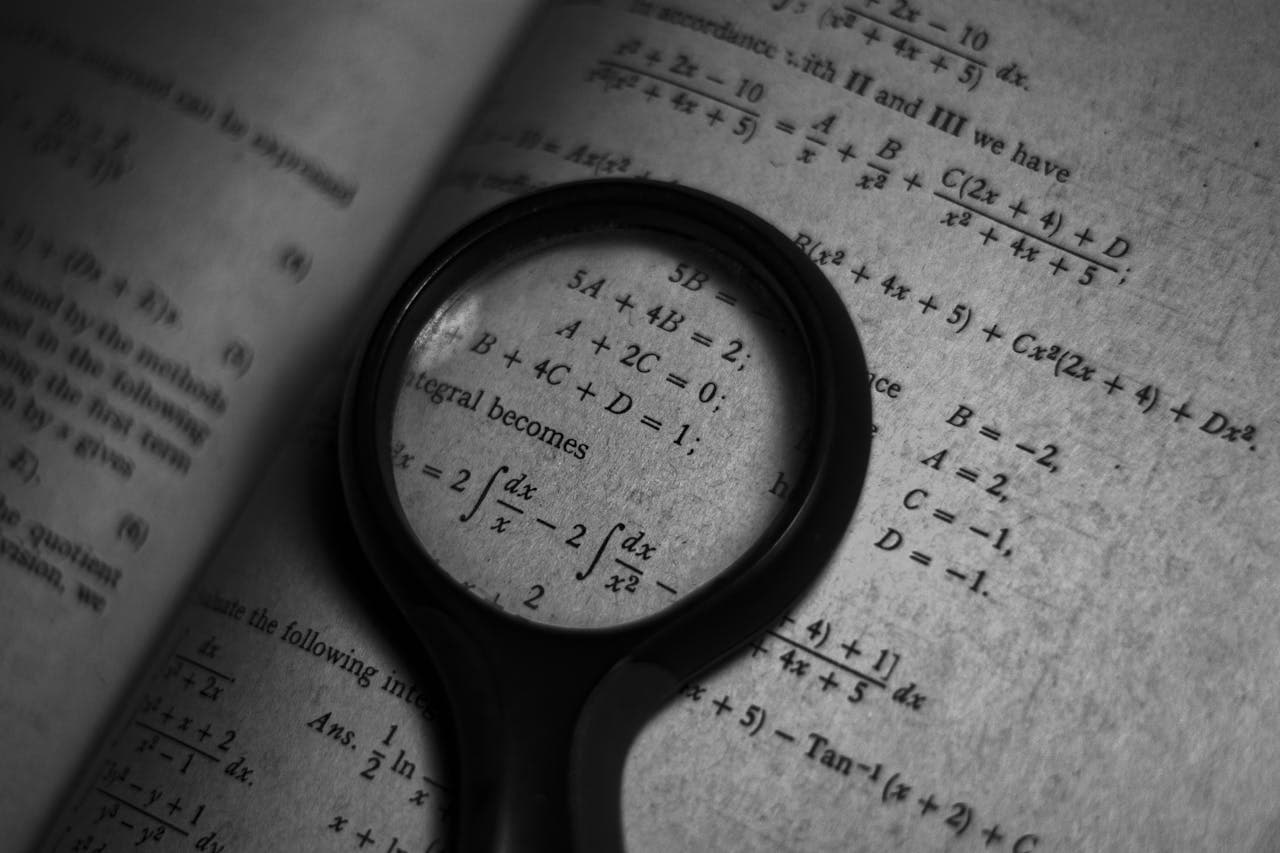
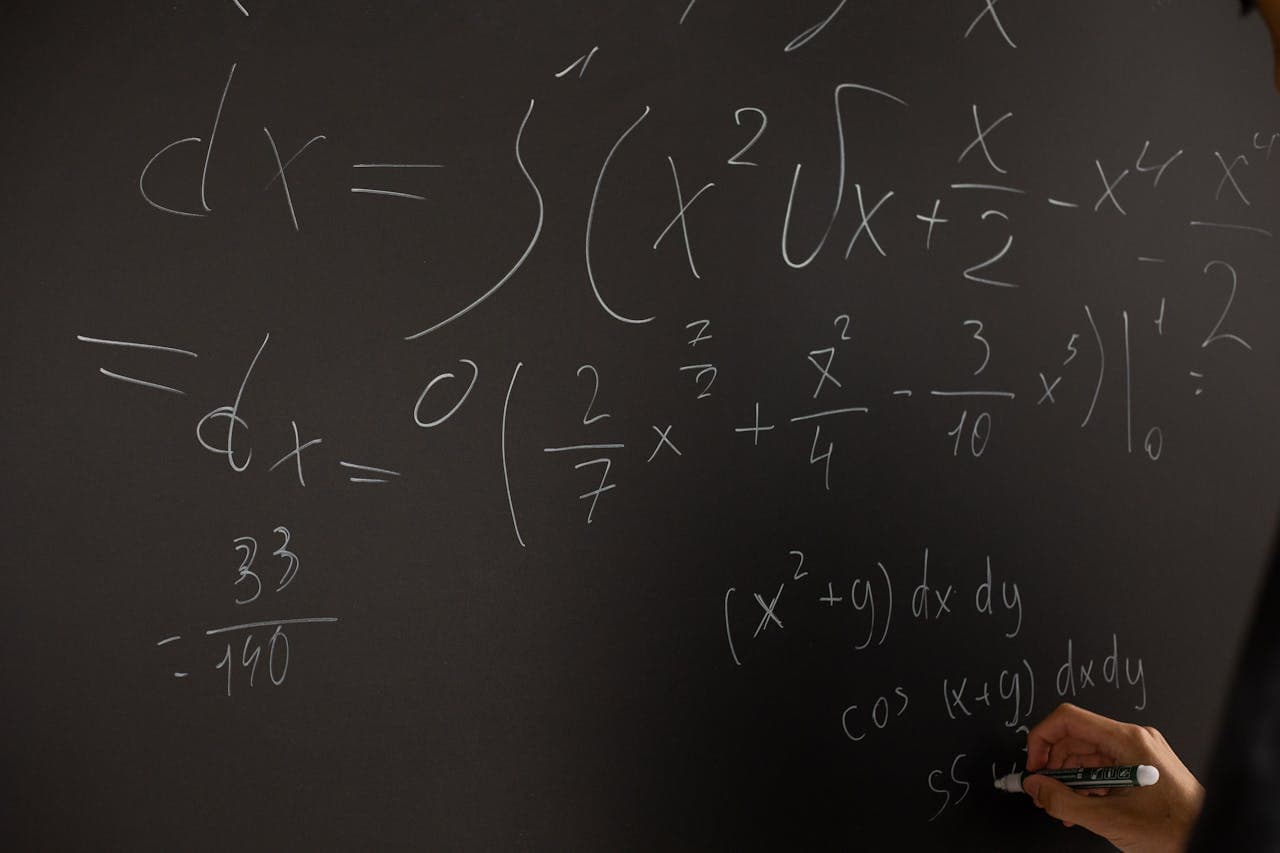
Calculus is the mathematical study of continuous change, in the same way that geometry is the study of shape and algebra is the study of generalizations of arithmetic operations. It has two major branches: differential calculus, which concerns instantaneous rates of change and slopes of curves, and integral calculus, which concerns accumulation of quantities and the areas under and between curves. Together, these branches are unified by the Fundamental Theorem of Calculus, one of the most important results in all of mathematics.
Developed independently by Isaac Newton and Gottfried Wilhelm Leibniz in the late 17th century, calculus is one of the most powerful mathematical tools ever created. It provides the language and framework for physics, engineering, economics, computer science, and virtually every quantitative discipline. Key concepts include limits, continuity, differentiation rules, integration techniques, infinite series, and multivariable extensions that generalize these ideas to higher dimensions.
From modeling planetary orbits to optimizing machine learning algorithms, calculus is the mathematical backbone of modern science and technology. Understanding derivatives and integrals unlocks the ability to analyze change, optimize systems, and solve problems that are impossible with algebra alone. Differential equations, which arise naturally from calculus, describe phenomena ranging from population growth and radioactive decay to fluid dynamics and electrical circuits.