Cell Biology
IntermediateCell biology, also known as cytology, is the scientific discipline that studies the structure, function, and behavior of cells. As the fundamental unit of life, the cell serves as the building block for all living organisms, from single-celled bacteria to complex multicellular organisms like humans. Cell biology bridges molecular biology and organismal physiology, providing essential insights into how life operates at its most basic level, including how cells obtain energy, replicate their DNA, divide, communicate with one another, and ultimately give rise to the diversity of tissues and organs found in nature.
The field has a rich history stretching back to the 1660s when Robert Hooke first observed cells in cork using an early microscope. The subsequent development of the cell theory by Matthias Schleiden, Theodor Schwann, and Rudolf Virchow established three foundational principles: all living organisms are composed of one or more cells, the cell is the basic unit of structure and organization in organisms, and all cells arise from pre-existing cells. Modern cell biology has been revolutionized by advances in electron microscopy, fluorescence imaging, molecular cloning, and genomic technologies, allowing scientists to visualize cellular processes in real time and manipulate genes with unprecedented precision.
Today, cell biology is central to advances in medicine, biotechnology, and agriculture. Understanding how cells function normally is the key to understanding what goes wrong in diseases such as cancer, diabetes, and neurodegenerative disorders. Techniques born from cell biology research, including stem cell therapy, gene editing with CRISPR-Cas9, and immunotherapy, represent some of the most promising frontiers in modern healthcare. The discipline continues to evolve rapidly, integrating computational approaches, systems biology, and single-cell omics to reveal the extraordinary complexity hidden within each living cell.
Practice a little. See where you stand.
Quiz
Reveal what you know — and what needs work
Adaptive Learn
Responds to how you reason, with real-time hints
Flashcards
Build recall through spaced, active review
Cheat Sheet
The essentials at a glance — exam-ready
Glossary
Master the vocabulary that unlocks understanding
Learning Roadmap
A structured path from foundations to mastery
Book
Deep-dive guide with worked examples
Steps
Choose the next step — build procedural reasoning
Key Concepts

One concept at a time.
Explore your way
Choose a different way to engage with this topic — no grading, just richer thinking.
Explore your way — choose one:
Curriculum alignment— Standards-aligned
Grade level
Learning objectives
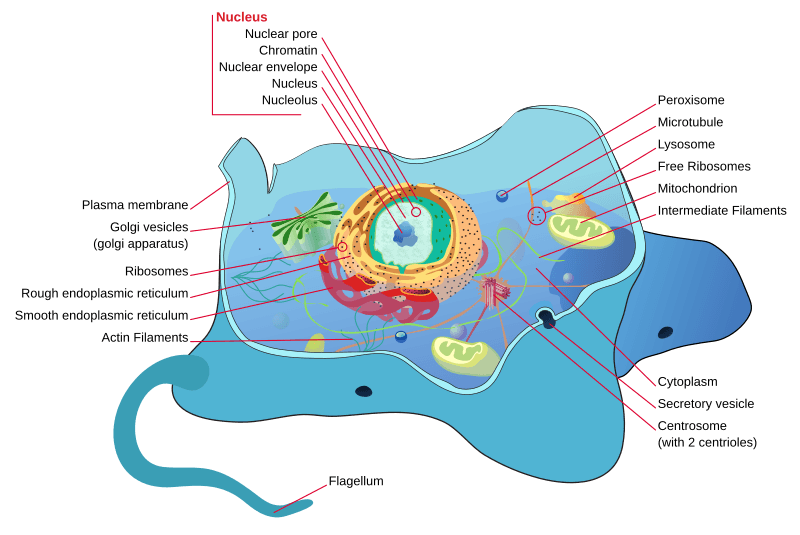
- •Identify the structure and function of major cellular organelles and their roles in eukaryotic cell processes
- •Explain the mechanisms of cell division, signal transduction, and intracellular transport at the molecular level
- •Analyze how disruptions in cellular processes contribute to diseases including cancer, neurodegeneration, and infection
- •Evaluate experimental techniques in cell biology including microscopy, flow cytometry, and cell culture methods
Recommended Resources
This page contains affiliate links. We may earn a commission at no extra cost to you.
Books
Molecular Biology of the Cell
by Bruce Alberts, Alexander Johnson, Julian Lewis, David Morgan, Martin Raff, Keith Roberts, Peter Walter
The Cell: A Molecular Approach
by Geoffrey Cooper, Robert Hausman
Essential Cell Biology
by Bruce Alberts, Karen Hopkin, Alexander Johnson, David Morgan, Martin Raff, Keith Roberts, Peter Walter
The Biology of Cancer
by Robert A. Weinberg
Related Topics
Molecular Biology
The study of biological processes at the molecular level, focusing on DNA, RNA, and protein structures and their roles in gene expression and cellular function.
Genetics
Genetics is the study of genes, heredity, and genetic variation in living organisms, encompassing topics from Mendelian inheritance and DNA structure to modern genomics, gene editing, and their applications in medicine and biotechnology.
Biochemistry
The study of chemical processes within and relating to living organisms, focusing on the structure and function of biomolecules such as proteins, nucleic acids, carbohydrates, and lipids.
Microbiology
The scientific study of microorganisms including bacteria, viruses, fungi, and protozoa, exploring their biology, ecology, and impact on human health and the environment.
Immunology
The study of the immune system, including its structure, function, and role in defending the body against infectious agents and disease.
Biotechnology
The application of biological systems and living organisms to develop technologies and products that advance medicine, agriculture, industry, and environmental sustainability.