Skip to content
Adaptive

Learn Cell Biology

Read the notes, then try the practice. It adapts as you go.When you're ready.

Session Length

~17 min

Adaptive Checks

15 questions

Transfer Probes

8

Lesson Notes

Cell biology, also known as cytology, is the scientific discipline that studies the structure, function, and behavior of cells. As the fundamental unit of life, the cell serves as the building block for all living organisms, from single-celled bacteria to complex multicellular organisms like humans. Cell biology bridges molecular biology and organismal physiology, providing essential insights into how life operates at its most basic level, including how cells obtain energy, replicate their DNA, divide, communicate with one another, and ultimately give rise to the diversity of tissues and organs found in nature.

The field has a rich history stretching back to the 1660s when Robert Hooke first observed cells in cork using an early microscope. The subsequent development of the cell theory by Matthias Schleiden, Theodor Schwann, and Rudolf Virchow established three foundational principles: all living organisms are composed of one or more cells, the cell is the basic unit of structure and organization in organisms, and all cells arise from pre-existing cells. Modern cell biology has been revolutionized by advances in electron microscopy, fluorescence imaging, molecular cloning, and genomic technologies, allowing scientists to visualize cellular processes in real time and manipulate genes with unprecedented precision.

Today, cell biology is central to advances in medicine, biotechnology, and agriculture. Understanding how cells function normally is the key to understanding what goes wrong in diseases such as cancer, diabetes, and neurodegenerative disorders. Techniques born from cell biology research, including stem cell therapy, gene editing with CRISPR-Cas9, and immunotherapy, represent some of the most promising frontiers in modern healthcare. The discipline continues to evolve rapidly, integrating computational approaches, systems biology, and single-cell omics to reveal the extraordinary complexity hidden within each living cell.

You'll be able to:

  • Identify the structure and function of major cellular organelles and their roles in eukaryotic cell processes
  • Explain the mechanisms of cell division, signal transduction, and intracellular transport at the molecular level
  • Analyze how disruptions in cellular processes contribute to diseases including cancer, neurodegeneration, and infection
  • Evaluate experimental techniques in cell biology including microscopy, flow cytometry, and cell culture methods

One step at a time.

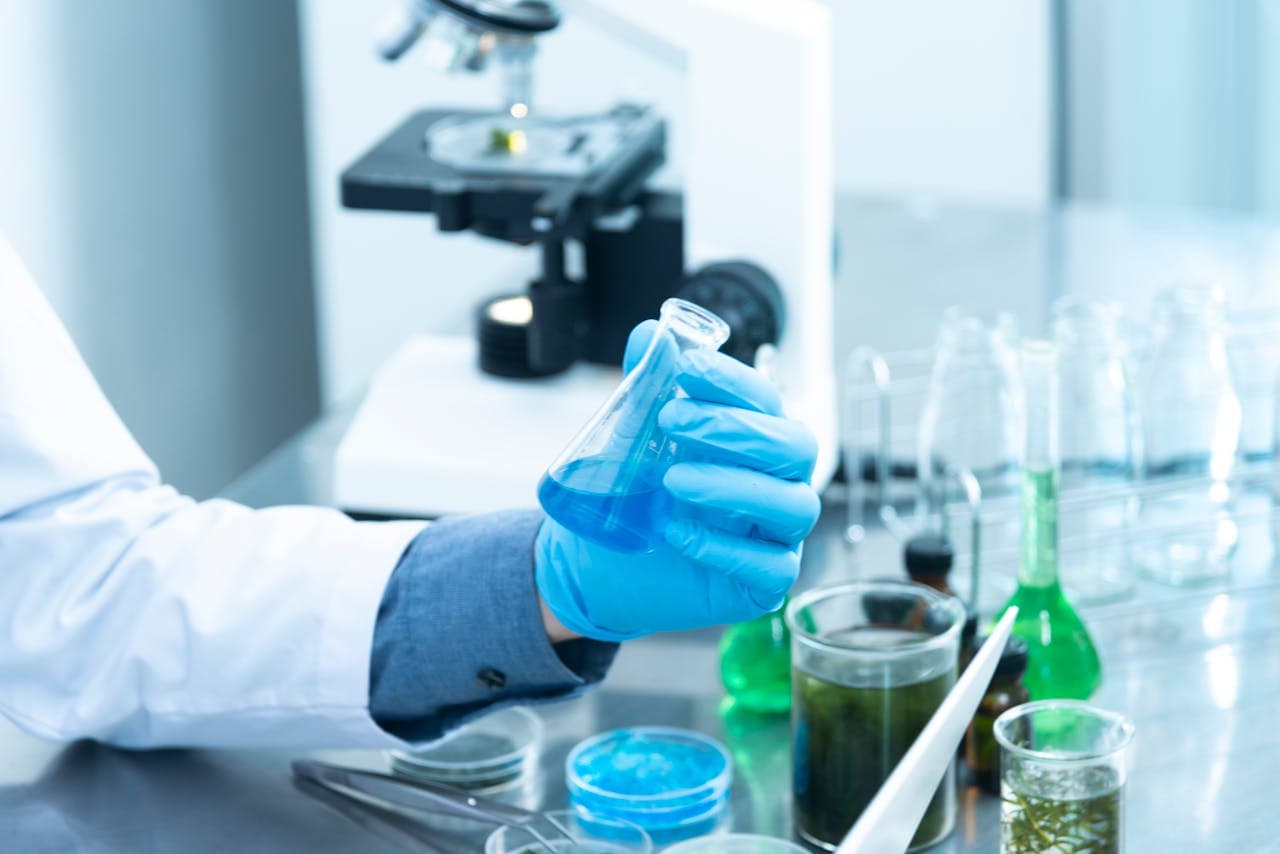
Cells viewed through a microscope
Exploring cellular structuresPexels

Key Concepts

Cell Theory

The foundational principle of biology stating that all living organisms are composed of cells, the cell is the basic structural and functional unit of life, and all cells arise from pre-existing cells through division. This theory, formulated in the 19th century, unified biology and provided a framework for understanding life at its most fundamental level.

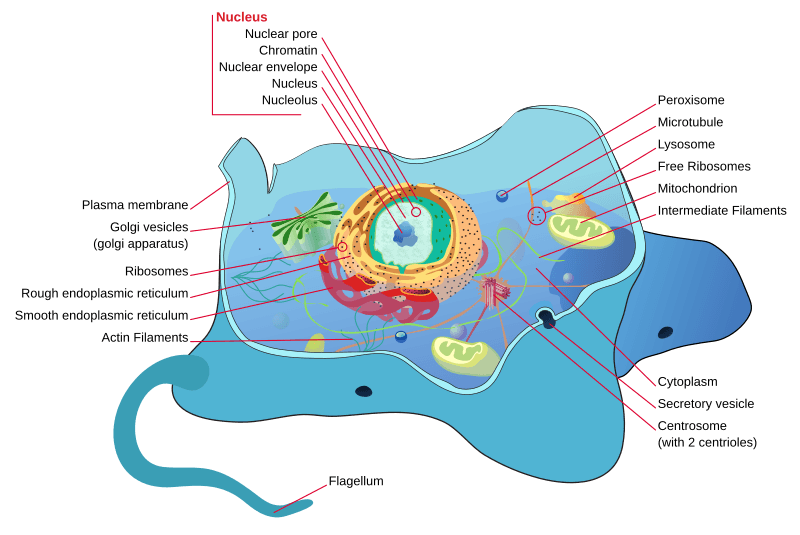
Diagram of a typical cell with labeled organelles

Example: When a wound heals, new skin cells are produced by the division of existing cells at the wound margin, illustrating Virchow's principle that all cells come from pre-existing cells.

Cell Membrane

A selectively permeable phospholipid bilayer that surrounds every cell, controlling the passage of substances into and out of the cell. It contains embedded proteins that serve as channels, receptors, and enzymes, enabling the cell to interact with its environment and maintain homeostasis.

Example: Sodium-potassium pumps embedded in the cell membrane of neurons actively transport sodium ions out and potassium ions in, establishing the electrochemical gradient essential for nerve impulse transmission.

Mitochondria

Double-membrane-bound organelles often called the powerhouses of the cell because they generate most of the cell's supply of adenosine triphosphate (ATP) through oxidative phosphorylation. Mitochondria possess their own circular DNA and ribosomes, supporting the endosymbiotic theory of their evolutionary origin from ancient bacteria.

Cellular organelles including mitochondria

Example: Muscle cells contain thousands of mitochondria to meet the high energy demands of contraction, which is why mitochondrial dysfunction can cause severe muscle weakness and fatigue.

DNA Replication

The biological process by which a cell copies its entire genome before cell division, ensuring each daughter cell receives a complete and accurate set of genetic instructions. The process is semiconservative, meaning each new DNA molecule consists of one original strand and one newly synthesized strand.

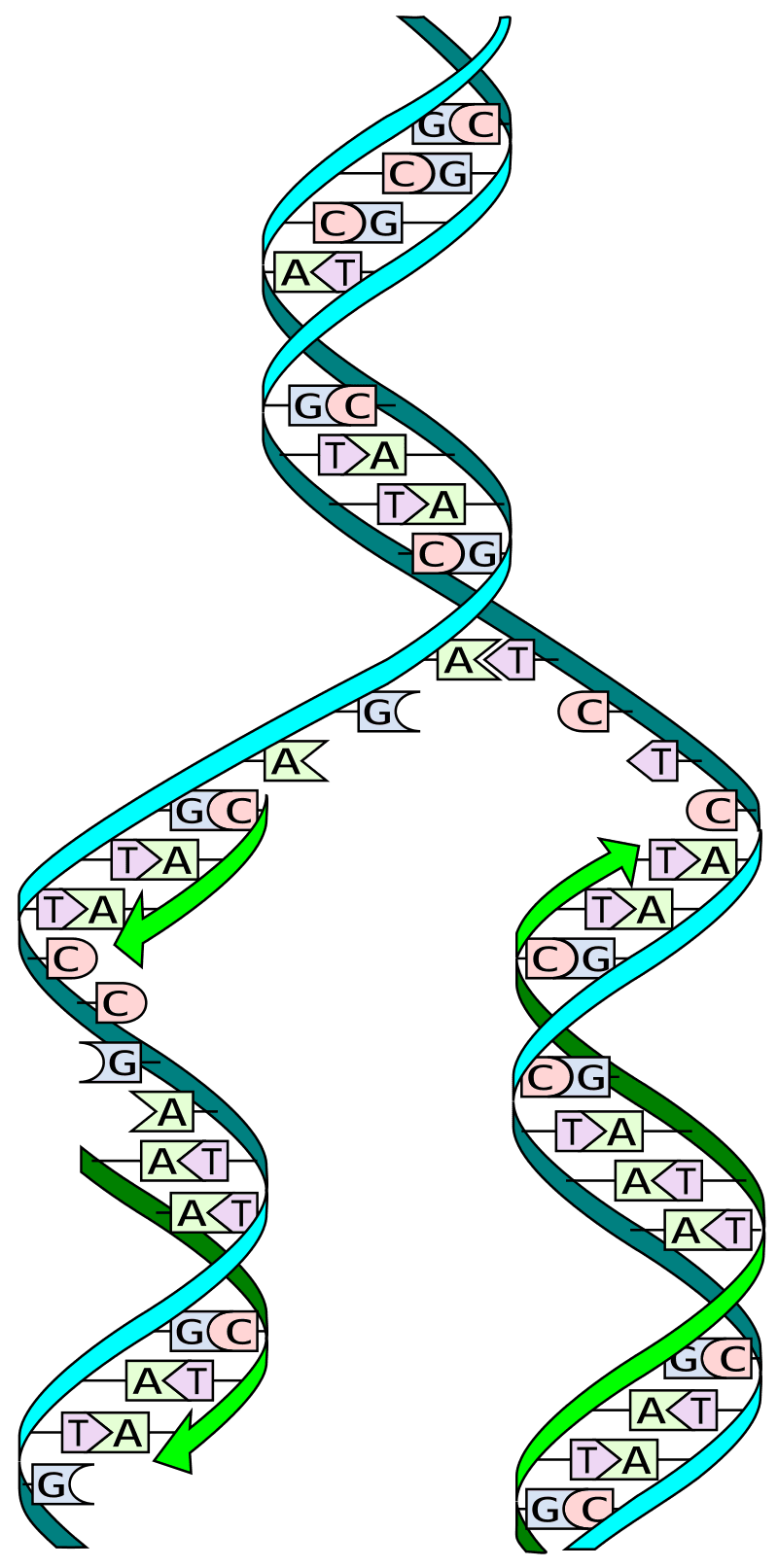
DNA replication fork showing leading and lagging strands

Example: Before a human cell divides, enzymes like DNA helicase unwind the double helix and DNA polymerase synthesizes new complementary strands, replicating all 6 billion base pairs with remarkably few errors.

Mitosis

A type of cell division that produces two genetically identical daughter cells from a single parent cell, used for growth, repair, and asexual reproduction in eukaryotic organisms. It proceeds through defined phases: prophase, metaphase, anaphase, and telophase, followed by cytokinesis.

Stages of mitosis showing chromosome separation

Example: When a lizard regenerates a lost tail, the cells at the wound site undergo rapid mitosis to produce new muscle, bone, and skin cells that are genetically identical to the original tissue.

Meiosis

A specialized form of cell division that reduces the chromosome number by half, producing four genetically unique haploid gametes from a single diploid cell. It involves two successive divisions and incorporates crossing over and independent assortment to generate genetic diversity.

Example: In human ovaries and testes, meiosis reduces the chromosome count from 46 to 23, so that when a sperm and egg fuse at fertilization, the resulting zygote has the correct 46 chromosomes.

Endoplasmic Reticulum

An extensive network of membrane-enclosed tubules and flattened sacs connected to the nuclear envelope, existing in two forms: rough ER (studded with ribosomes for protein synthesis and processing) and smooth ER (involved in lipid synthesis, detoxification, and calcium storage).

Example: Liver cells have abundant smooth endoplasmic reticulum because the liver plays a major role in detoxifying drugs and metabolizing lipids, processes that rely heavily on smooth ER enzymes.

Cell Signaling

The complex system of communication that governs basic cellular activities and coordinates cell actions. Cells detect and respond to chemical signals from their environment through signal transduction pathways, which convert extracellular signals into intracellular responses such as gene expression changes or metabolic adjustments.

Example: When insulin binds to its receptor on a liver cell, it triggers a signaling cascade that activates glucose transporters and enzymes, causing the cell to absorb glucose from the blood and store it as glycogen.

More terms are available in the glossary.

Explore your way

Choose a different way to engage with this topic β€” no grading, just richer thinking.

Explore your way β€” choose one:

Explore with AI β†’

Concept Map

See how the key ideas connect. Nodes color in as you practice.

Worked Example

Walk through a solved problem step-by-step. Try predicting each step before revealing it.

Adaptive Practice

This is guided practice, not just a quiz. Hints and pacing adjust in real time.

Small steps add up.

What you get while practicing:

  • Math Lens cues for what to look for and what to ignore.
  • Progressive hints (direction, rule, then apply).
  • Targeted feedback when a common misconception appears.

Teach It Back

The best way to know if you understand something: explain it in your own words.

Keep Practicing

More ways to strengthen what you just learned.

Cell Biology Adaptive Course - Learn with AI Support | PiqCue