Skip to content
Adaptive

Learn Cellular Respiration

Read the notes, then try the practice. It adapts as you go.When you're ready.

Session Length

~17 min

Adaptive Checks

15 questions

Transfer Probes

8

Lesson Notes

Cellular respiration is the set of metabolic reactions that cells use to convert the chemical energy stored in glucose and other organic molecules into adenosine triphosphate (ATP), the universal energy currency of life. The process occurs in three main stages: glycolysis in the cytoplasm, the Krebs cycle (citric acid cycle) in the mitochondrial matrix, and the electron transport chain on the inner mitochondrial membrane. Together, these stages extract energy through a series of controlled oxidation-reduction reactions, ultimately producing 36 to 38 ATP molecules per glucose.

The efficiency of cellular respiration depends on oxygen availability. In aerobic conditions, the full pathway operates, yielding maximum ATP. When oxygen is scarce, cells resort to anaerobic fermentation -- either lactic acid fermentation in animal muscle cells or alcoholic fermentation in yeast -- which regenerates NAD+ to sustain glycolysis but produces only 2 ATP per glucose. Understanding this distinction is critical for fields ranging from exercise physiology to food science and industrial biotechnology.

Cellular respiration and photosynthesis form a complementary cycle in the biosphere: photosynthesis captures solar energy and stores it in glucose, while respiration releases that energy for cellular work. The carbon, oxygen, and hydrogen atoms cycle between CO2, H2O, and organic molecules, maintaining the chemical balance that sustains life on Earth. Disruptions to cellular respiration -- whether from metabolic poisons like cyanide, genetic mitochondrial disorders, or oxygen deprivation -- can be immediately life-threatening, underscoring the central importance of this pathway.

You'll be able to:

  • Describe the four stages of aerobic cellular respiration and identify where each occurs in the cell
  • Calculate the net ATP yield from each stage and the total yield per glucose molecule
  • Explain how the electron transport chain uses NADH and FADH2 to generate a proton gradient and drive ATP synthesis via chemiosmosis
  • Compare aerobic respiration with anaerobic fermentation in terms of inputs, outputs, and ATP efficiency
  • Predict the effects of metabolic inhibitors (such as cyanide, DNP, and oligomycin) on specific stages of the pathway

One step at a time.

Key Concepts

Glycolysis

The first stage of cellular respiration, occurring in the cytoplasm. It splits one glucose molecule (6 carbons) into two pyruvate molecules (3 carbons each), producing a net gain of 2 ATP and 2 NADH without requiring oxygen.

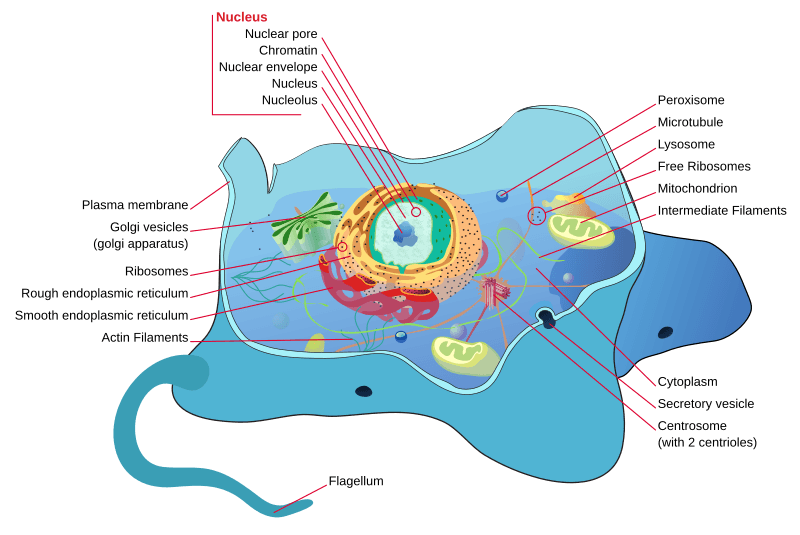
Cell diagram showing metabolic pathways

Example: When you sprint, your muscle cells perform glycolysis rapidly. Even if oxygen is scarce, glycolysis still produces 2 ATP per glucose molecule.

Krebs Cycle (Citric Acid Cycle)

A series of chemical reactions in the mitochondrial matrix that oxidizes acetyl-CoA (derived from pyruvate) to CO2, generating NADH, FADH2, and a small amount of ATP (or GTP) per cycle turn.

Example: Each turn of the Krebs cycle produces 3 NADH, 1 FADH2, and 1 ATP. Since each glucose yields two pyruvates, the cycle turns twice per glucose molecule.

Electron Transport Chain (ETC)

A series of protein complexes embedded in the inner mitochondrial membrane that transfer electrons from NADH and FADH2 to oxygen, creating a proton gradient used to drive ATP synthesis via chemiosmosis.

Example: The ETC produces about 34 of the 36-38 total ATP from one glucose molecule, making it by far the most productive stage of aerobic respiration.

Aerobic vs. Anaerobic Respiration

Aerobic respiration requires oxygen as the final electron acceptor and produces 36-38 ATP per glucose. Anaerobic respiration (fermentation) occurs without oxygen, regenerating NAD+ to allow glycolysis to continue, but produces only 2 ATP per glucose.

Example: Yeast performs alcoholic fermentation to produce ethanol and CO2 (used in bread-making and brewing), while human muscles perform lactic acid fermentation during intense exercise.

ATP (Adenosine Triphosphate)

The primary energy currency of the cell. Energy is released when ATP is hydrolyzed to ADP and inorganic phosphate. Cellular respiration is the main process that regenerates ATP from ADP.

Example: A single cell can use and regenerate approximately 10 million ATP molecules per second, powering everything from muscle contraction to nerve impulses.

Explore your way

Choose a different way to engage with this topic β€” no grading, just richer thinking.

Explore your way β€” choose one:

Explore with AI β†’

Concept Map

See how the key ideas connect. Nodes color in as you practice.

Worked Example

Walk through a solved problem step-by-step. Try predicting each step before revealing it.

Adaptive Practice

This is guided practice, not just a quiz. Hints and pacing adjust in real time.

Small steps add up.

What you get while practicing:

  • Math Lens cues for what to look for and what to ignore.
  • Progressive hints (direction, rule, then apply).
  • Targeted feedback when a common misconception appears.

Teach It Back

The best way to know if you understand something: explain it in your own words.

Keep Practicing

More ways to strengthen what you just learned.

Cellular Respiration Adaptive Course - Learn with AI Support | PiqCue