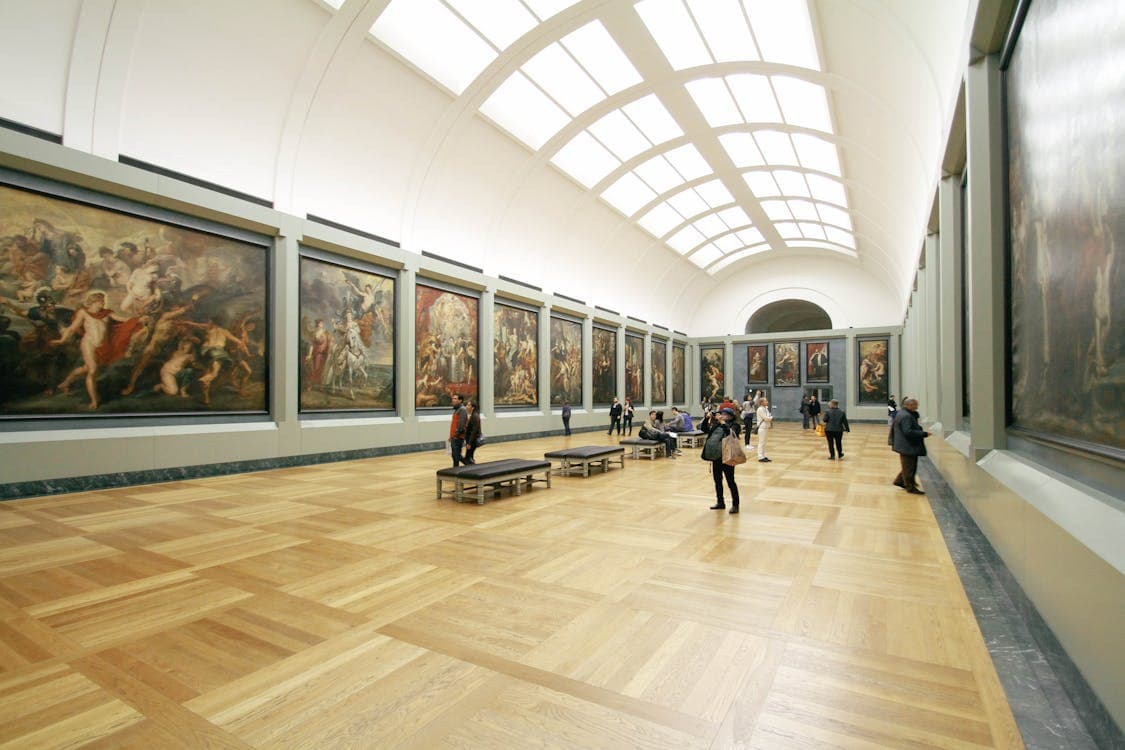
Early Europe and Colonial Americas Art
IntermediateEarly European and Colonial Americas art from 200 to 1750 CE.
Byzantine mosaics and icons, Romanesque sculpture and architecture, Gothic cathedrals and stained glass, Italian Renaissance perspective and humanism, Northern Renaissance oil technique, Mannerism, Baroque drama and Counter-Reformation art, Rococo elegance, and colonial syncretism in the Americas.
Practice a little. See where you stand.
Quiz
Reveal what you know — and what needs work
Adaptive Learn
Responds to how you reason, with real-time hints
Flashcards
Build recall through spaced, active review
Cheat Sheet
The essentials at a glance — exam-ready
Glossary
Master the vocabulary that unlocks understanding
Learning Roadmap
A structured path from foundations to mastery
Book
Deep-dive guide with worked examples
Lab
Hands-on practice for this subject
Key Concepts
One concept at a time.
Explore your way
Choose a different way to engage with this topic — no grading, just richer thinking.
Explore your way — choose one:
Curriculum alignment— Standards-aligned
Grade level
Learning objectives
- •Analyze Byzantine visual conventions and theological function
- •Compare Romanesque and Gothic architectural innovations
- •Evaluate Renaissance perspective and humanism
- •Examine Baroque drama and Counter-Reformation patronage
- •Assess colonial syncretism in the Americas
Recommended Resources
This page contains affiliate links. We may earn a commission at no extra cost to you.
Books
Art in Renaissance Italy
by John T. Paoletti
Gothic Art
by Michael Camille
Courses
Related Topics
Art History
The study of visual arts across cultures and centuries, examining how painting, sculpture, and architecture reflect evolving aesthetic ideals, social conditions, and philosophical ideas from antiquity to the present day.
Renaissance Art
Renaissance art encompasses the painting, sculpture, and architecture produced in Europe from roughly the 14th to the 17th century, characterized by a revival of classical ideals, the development of linear perspective, and a new emphasis on naturalism and humanism.
Architecture
The art and science of designing buildings and physical structures, integrating aesthetics, engineering, cultural expression, and environmental responsibility to shape the human-built environment.
Aesthetics
The philosophical study of beauty, art, taste, and sensory experience, exploring what makes things aesthetically valuable and how humans perceive and judge beauty.