Skip to content
Adaptive

Learn Macroeconomics — Rate unemployment, Supply inflation (extended)

Read the notes, then try the practice. It adapts as you go.When you're ready.

Session Length

~14 min

Adaptive Checks

13 questions

Transfer Probes

7

Lesson Notes

Macroeconomics is the branch of economics that studies the behavior, structure, and performance of an economy as a whole rather than focusing on individual markets or actors. It examines aggregate phenomena such as national output (GDP), unemployment rates, inflation, and the balance of trade. By analyzing these large-scale indicators, macroeconomists seek to understand why economies grow, why they sometimes contract, and what forces drive the business cycle from expansion through recession and recovery.

The foundations of modern macroeconomics were laid by John Maynard Keynes during the Great Depression of the 1930s, when classical economic theory failed to explain prolonged mass unemployment. Keynes argued that aggregate demand, the total spending in an economy, was the primary driver of economic output and employment. His ideas gave rise to Keynesian economics, which justified government intervention through fiscal policy. Since then, competing schools of thought, including Monetarism championed by Milton Friedman, New Classical economics, and New Keynesian synthesis, have enriched the field with debates over the effectiveness of policy, the role of expectations, and the self-correcting nature of markets.

Today, macroeconomics plays a central role in public policy and global affairs. Central banks use monetary policy tools such as interest rate adjustments and quantitative easing to manage inflation and stabilize economies. Governments deploy fiscal policy, adjusting taxation and spending, to stimulate growth or cool overheating economies. Understanding macroeconomic principles is essential for interpreting economic news, evaluating policy proposals, making informed investment decisions, and grasping how interconnected the global economy has become through trade, capital flows, and international monetary systems.

You'll be able to:

  • Analyze aggregate demand and supply models to explain business cycles, inflation, unemployment, and economic growth dynamics
  • Evaluate monetary policy tools including interest rates, open market operations, and quantitative easing for macroeconomic stabilization
  • Apply Keynesian, monetarist, and new classical frameworks to debate fiscal policy effectiveness and government intervention tradeoffs
  • Compare GDP measurement approaches, national income accounting, and alternative welfare indicators for assessing economic performance

One step at a time.

Economic flow diagram and financial data
The circular flow of the economyPexels

Key Concepts

Gross Domestic Product (GDP)

The total monetary value of all finished goods and services produced within a country's borders in a specific time period. It is the broadest quantitative measure of a nation's total economic activity and serves as the primary scorecard for an economy's health.

GDP growth chart showing economic indicators

Example: If a country produces $10 trillion worth of goods and services in a year, its annual GDP is $10 trillion. When GDP grows by 2.5% year-over-year, the economy is expanding.

Inflation

A sustained increase in the general price level of goods and services in an economy over a period of time. When the price level rises, each unit of currency buys fewer goods and services, eroding purchasing power.

Example: If the Consumer Price Index rises from 100 to 103 over a year, the inflation rate is 3%, meaning a basket of goods that cost $100 last year now costs $103.

Unemployment Rate

The percentage of the labor force that is jobless and actively seeking employment. It is a key indicator of labor market health and has several types: frictional (job transitions), structural (skills mismatch), and cyclical (demand shortfalls).

Example: During the 2008 financial crisis, the U.S. unemployment rate rose from 5% to 10% as businesses laid off workers due to collapsing demand, representing cyclical unemployment.

Monetary Policy

Actions taken by a central bank to manage the money supply and interest rates to achieve macroeconomic objectives like controlling inflation, managing unemployment, and stabilizing the currency.

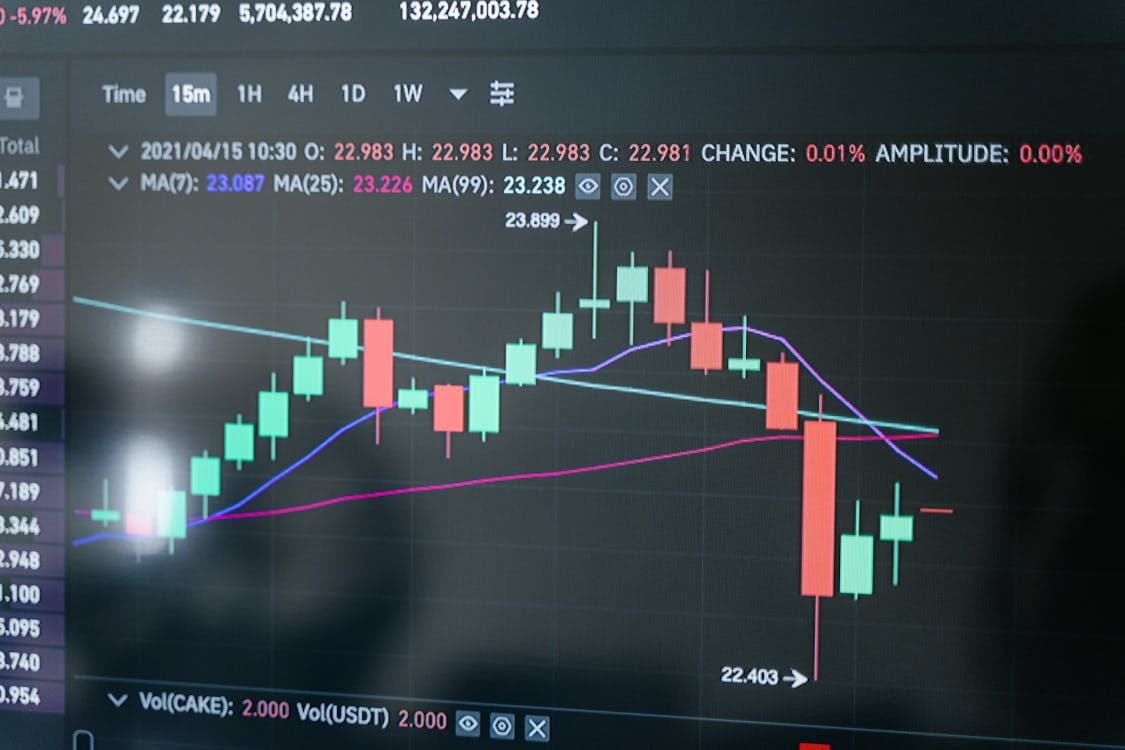
Financial markets reflecting monetary policy impact

Example: When the Federal Reserve lowers the federal funds rate from 5% to 3%, it becomes cheaper for banks to borrow, leading to lower interest rates for consumers and businesses, which stimulates spending and investment.

Fiscal Policy

The use of government spending and taxation to influence the economy. Expansionary fiscal policy increases spending or cuts taxes to stimulate growth, while contractionary fiscal policy does the opposite to cool an overheating economy.

Example: During a recession, a government might pass a $1 trillion stimulus package combining infrastructure spending and tax rebates to boost aggregate demand and create jobs.

Aggregate Demand and Aggregate Supply

Aggregate demand is the total demand for all goods and services in an economy at a given price level. Aggregate supply is the total output firms are willing to produce at each price level. Their intersection determines the equilibrium price level and real GDP.

Supply and demand curves in aggregate market

Example: A surge in consumer confidence shifts aggregate demand rightward, raising both the price level and real output in the short run, which is why central banks monitor consumer sentiment closely.

Business Cycle

The natural fluctuation of the economy between periods of expansion (growth) and contraction (recession). The four phases are expansion, peak, contraction (recession), and trough, after which a new cycle begins.

Example: The U.S. economy expanded from 2009 to 2020, the longest expansion in recorded history, before the COVID-19 pandemic triggered a sharp contraction.

Phillips Curve

An economic model showing an inverse relationship between inflation and unemployment in the short run. It suggests that lower unemployment comes at the cost of higher inflation, and vice versa, though this trade-off may break down in the long run.

Example: In the late 1960s, the U.S. experienced low unemployment alongside rising inflation, consistent with movement along the Phillips Curve. However, 1970s stagflation challenged this relationship.

More terms are available in the glossary.

Explore your way

Choose a different way to engage with this topic — no grading, just richer thinking.

Explore your way — choose one:

Explore with AI →

Concept Map

See how the key ideas connect. Nodes color in as you practice.

Worked Example

Walk through a solved problem step-by-step. Try predicting each step before revealing it.

Adaptive Practice

This is guided practice, not just a quiz. Hints and pacing adjust in real time.

Small steps add up.

What you get while practicing:

  • Math Lens cues for what to look for and what to ignore.
  • Progressive hints (direction, rule, then apply).
  • Targeted feedback when a common misconception appears.

Teach It Back

The best way to know if you understand something: explain it in your own words.

Keep Practicing

More ways to strengthen what you just learned.

Macroeconomics — Rate unemployment, Supply inflation (extended) Adaptive Course - Learn with AI Support | PiqCue