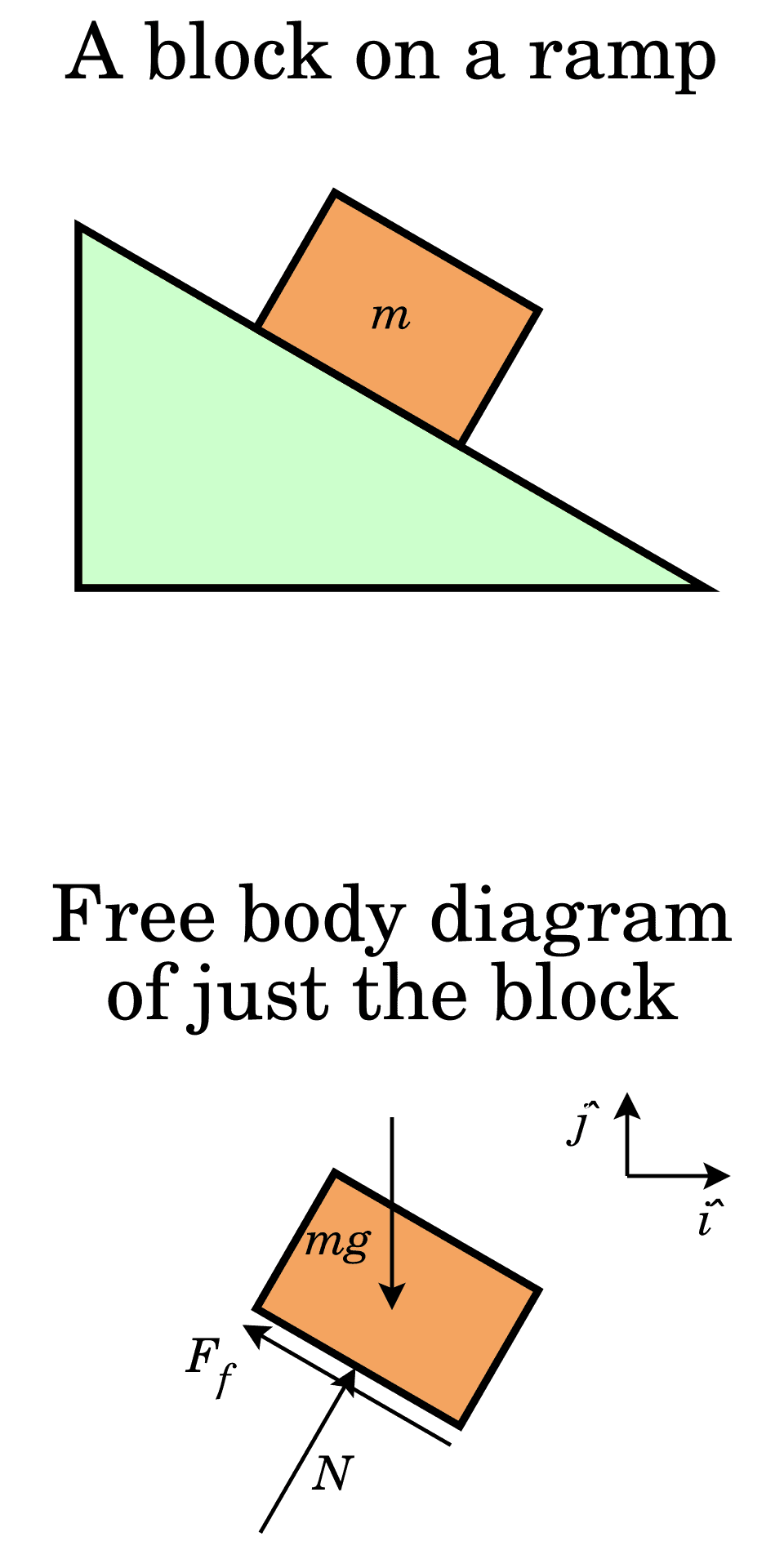
Newton's three laws of motion form the foundation of classical mechanics and explain how objects behave when forces act on them. The first law (law of inertia) states that an object remains at rest or moves at constant velocity unless a net external force acts upon it. The second law quantifies this relationship with the equation F = ma, linking net force, mass, and acceleration. The third law establishes that every action force has an equal and opposite reaction force acting on a different object.
Building correct intuitions about these laws requires confronting several persistent misconceptions. Many students believe that motion requires a continuous force, that heavier objects fall faster, or that action-reaction pairs cancel each other out. Working through carefully designed problems, especially free-body diagrams and multi-object systems, helps replace these naive ideas with accurate physical reasoning.
Newton's laws connect directly to nearly every other topic in mechanics, including friction, projectile motion, circular motion, and momentum conservation. Mastering these laws provides the analytical toolkit needed to solve problems ranging from elevator physics and Atwood machines to vehicle collisions and orbital mechanics.