
Physics
IntermediatePhysics is the foundational natural science that investigates matter, energy, and the fundamental forces governing the universe. From the subatomic realm of quarks and leptons to the large-scale structure of galaxies and cosmic filaments, physics seeks to uncover the quantitative laws that describe how the physical world behaves. Its core branches include classical mechanics, which describes the motion of macroscopic objects under the influence of forces; thermodynamics and statistical mechanics, which connect the microscopic behavior of particles to macroscopic properties like temperature and pressure; electromagnetism, which unifies electric and magnetic phenomena into a single elegant framework; and optics, which explores the behavior of light as both a wave and a particle.
Modern physics, born in the early twentieth century, dramatically expanded our understanding of nature at extreme scales. Albert Einstein's special and general theories of relativity revealed that space and time are interwoven into a four-dimensional fabric that is curved by mass and energy, fundamentally altering our conceptions of gravity, simultaneity, and the speed of light as an absolute cosmic speed limit. Quantum mechanics, developed by pioneers such as Max Planck, Niels Bohr, Werner Heisenberg, and Erwin Schrodinger, demonstrated that at the atomic and subatomic level, particles exhibit wave-particle duality, energy is quantized, and measurement outcomes are inherently probabilistic. Together, relativity and quantum mechanics form the two pillars of modern physics and underpin technologies ranging from GPS satellites to semiconductor chips.
Physics is also a deeply practical discipline whose discoveries drive technological innovation across every sector of modern life. The principles of electromagnetism gave rise to electric power generation, radio communication, and fiber-optic networks. Quantum mechanics enabled the invention of lasers, transistors, and magnetic resonance imaging. Nuclear physics led to both nuclear energy and medical isotope therapies. Today, physicists push the frontiers of knowledge through experiments at particle accelerators like the Large Hadron Collider, observations from space telescopes like the James Webb Space Telescope, and theoretical work on unifying gravity with quantum mechanics through candidates such as string theory and loop quantum gravity. Studying physics cultivates rigorous analytical thinking, mathematical fluency, and a capacity for modeling complex systems -- skills that are valued in careers spanning engineering, data science, finance, and academia.
Practice a little. See where you stand.
Quiz
Reveal what you know — and what needs work
Adaptive Learn
Responds to how you reason, with real-time hints
Flashcards
Build recall through spaced, active review
Cheat Sheet
The essentials at a glance — exam-ready
Glossary
Master the vocabulary that unlocks understanding
Learning Roadmap
A structured path from foundations to mastery
Book
Deep-dive guide with worked examples
Calculator
Run the numbers and build intuition
Steps
Choose the next step — build procedural reasoning
Key Concepts
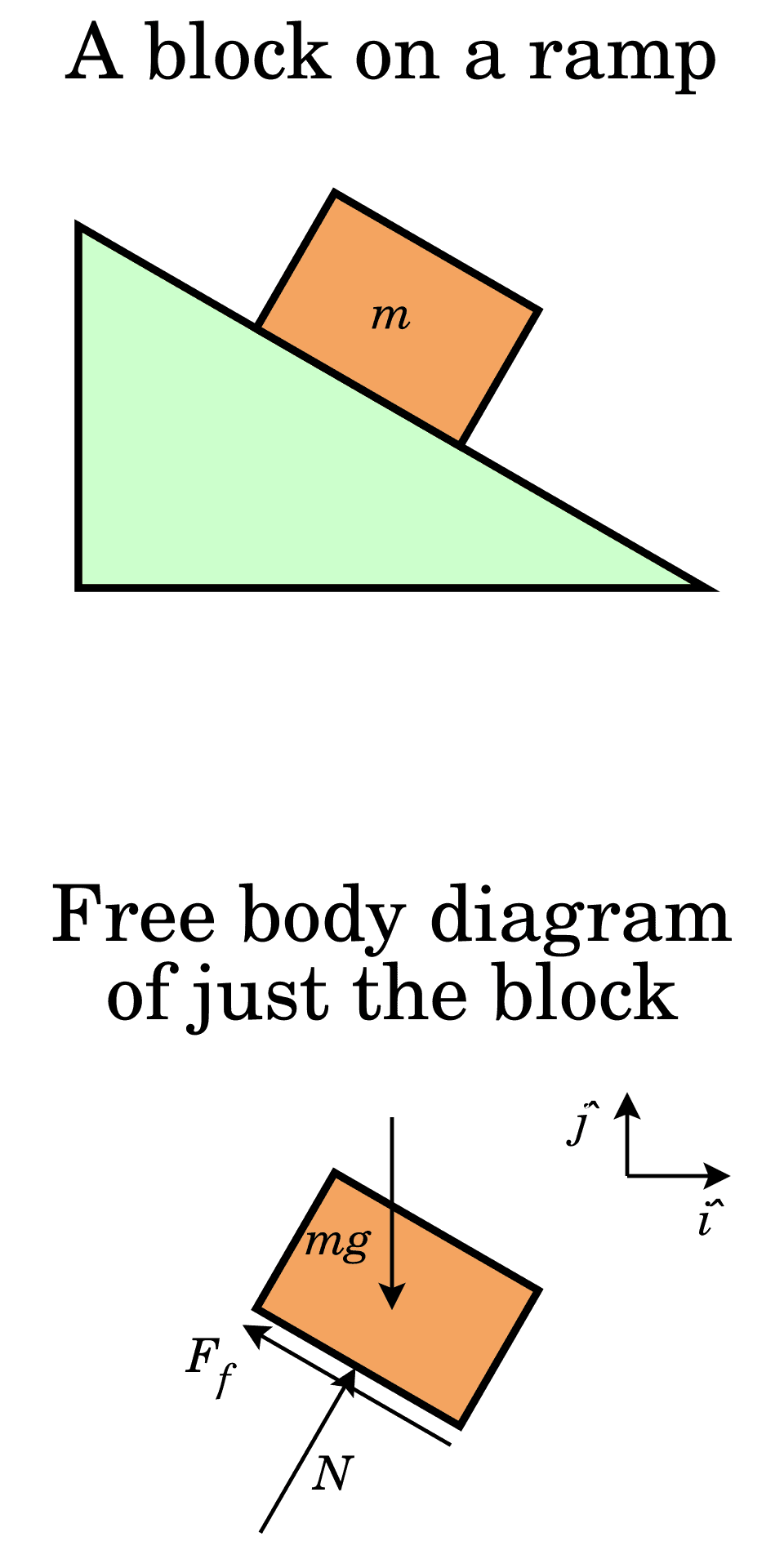
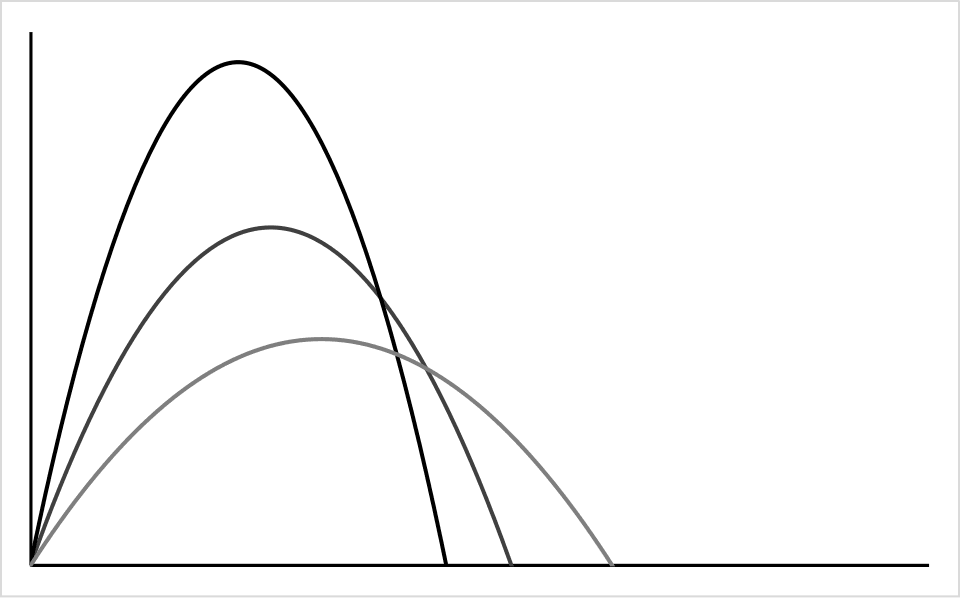
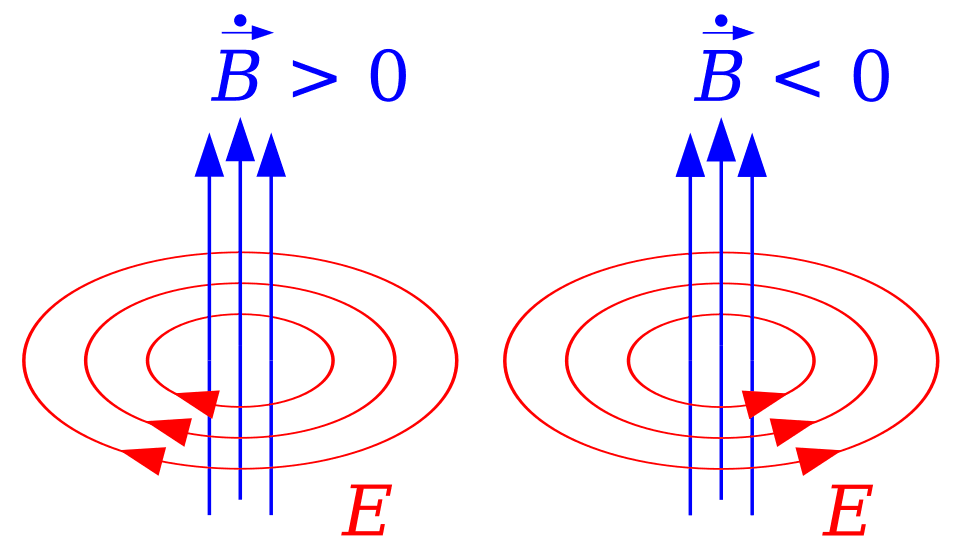
One concept at a time.
Explore your way
Choose a different way to engage with this topic — no grading, just richer thinking.
Explore your way — choose one:
More ways to explore
Curriculum alignment— Standards-aligned
Grade level
Learning objectives
- •Apply Newtonian mechanics principles including force analysis and energy conservation to solve multi-body system problems
- •Analyze electromagnetic theory using Maxwell's equations to explain wave propagation, field interactions, and circuit behavior
- •Evaluate thermodynamic laws and statistical mechanics frameworks to predict energy transfer and entropy in physical systems
- •Distinguish between classical and quantum mechanical descriptions of matter and radiation at atomic and subatomic scales
Recommended Resources
This page contains affiliate links. We may earn a commission at no extra cost to you.
Books
Fundamentals of Physics
by David Halliday, Robert Resnick, and Jearl Walker
The Feynman Lectures on Physics
by Richard P. Feynman, Robert B. Leighton, and Matthew Sands
University Physics with Modern Physics
by Hugh D. Young and Roger A. Freedman
Six Easy Pieces: Essentials of Physics Explained by Its Most Brilliant Teacher
by Richard P. Feynman
Related Topics
Quantum Mechanics
The fundamental theory of physics describing the behavior of matter and energy at atomic and subatomic scales, governed by wave functions, probability, and quantized energy levels.
Astronomy
The scientific study of celestial objects, space, and the physical universe, exploring everything from nearby planets to the most distant galaxies and the fundamental laws governing the cosmos.
Chemistry
Chemistry explores the composition, structure, and transformations of matter at the atomic and molecular level, serving as the central science that connects physics, biology, and engineering.
Mathematics
The study of numbers, quantities, shapes, and patterns using logical reasoning and abstract structures, serving as the foundational language of science and technology.
Engineering
The application of scientific and mathematical principles to design, build, and optimize structures, machines, systems, and processes that address real-world needs.
Astrophysics
The branch of physics that uses the laws of physics and chemistry to explain the birth, life, and death of stars, galaxies, and the universe itself.
Physics — Astronaut station, Electric measures (extended)
Physics is the study of matter, energy, and the fundamental forces of nature, encompassing everything from the motion of everyday objects to the behavior of subatomic particles and the structure of the cosmos.