Skip to content
Adaptive

Learn Renaissance and Reformation

Read the notes, then try the practice. It adapts as you go.When you're ready.

Session Length

~17 min

Adaptive Checks

15 questions

Transfer Probes

8

Lesson Notes

The Renaissance and Reformation represent two of the most transformative movements in European history, spanning roughly the 14th through the 16th centuries. The Renaissance, meaning 'rebirth,' began in the Italian city-states of Florence, Venice, and Rome before spreading northward across Europe. It was characterized by a renewed interest in the classical learning of ancient Greece and Rome, a celebration of human potential known as humanism, and revolutionary achievements in art, architecture, literature, and science. Figures such as Leonardo da Vinci, Michelangelo, Raphael, and Machiavelli redefined artistic expression and political thought, while the development of linear perspective and naturalism transformed visual culture.

The Protestant Reformation, ignited by Martin Luther's Ninety-Five Theses in 1517, shattered the religious unity of Western Christendom. Luther's challenge to papal authority and the sale of indulgences was amplified by the printing press, enabling rapid dissemination of reformist ideas across Europe. Other reformers followed: John Calvin established a theocratic community in Geneva emphasizing predestination, Huldrych Zwingli led reforms in Zurich, and Henry VIII broke with Rome to create the Church of England. The Catholic Church responded with the Counter-Reformation, including the Council of Trent (1545-1563), the founding of the Jesuit order, and the Roman Inquisition, reasserting doctrine while addressing some criticisms of corruption.

The intersection of the Renaissance and Reformation reshaped European society in profound ways. The printing press, perfected by Johannes Gutenberg around 1440, served as the technological catalyst for both movements, enabling mass literacy and the democratization of knowledge. Humanist education emphasized critical thinking and textual analysis, which ironically provided the intellectual tools that reformers used to challenge Church authority. Together, these movements laid the groundwork for the modern world by promoting individualism, questioning established authority, and fostering the development of nation-states, vernacular literatures, and new forms of religious and political identity.

You'll be able to:

  • Explain how the Renaissance revived classical learning and transformed European art, architecture, and intellectual life
  • Analyze the causes and consequences of the Protestant Reformation, including the theological positions of Luther, Calvin, and Zwingli
  • Evaluate the role of the printing press in spreading Renaissance and Reformation ideas
  • Assess the effectiveness of the Catholic Counter-Reformation in responding to Protestant challenges
  • Compare the Italian and Northern Renaissance in terms of intellectual emphasis and artistic style

One step at a time.

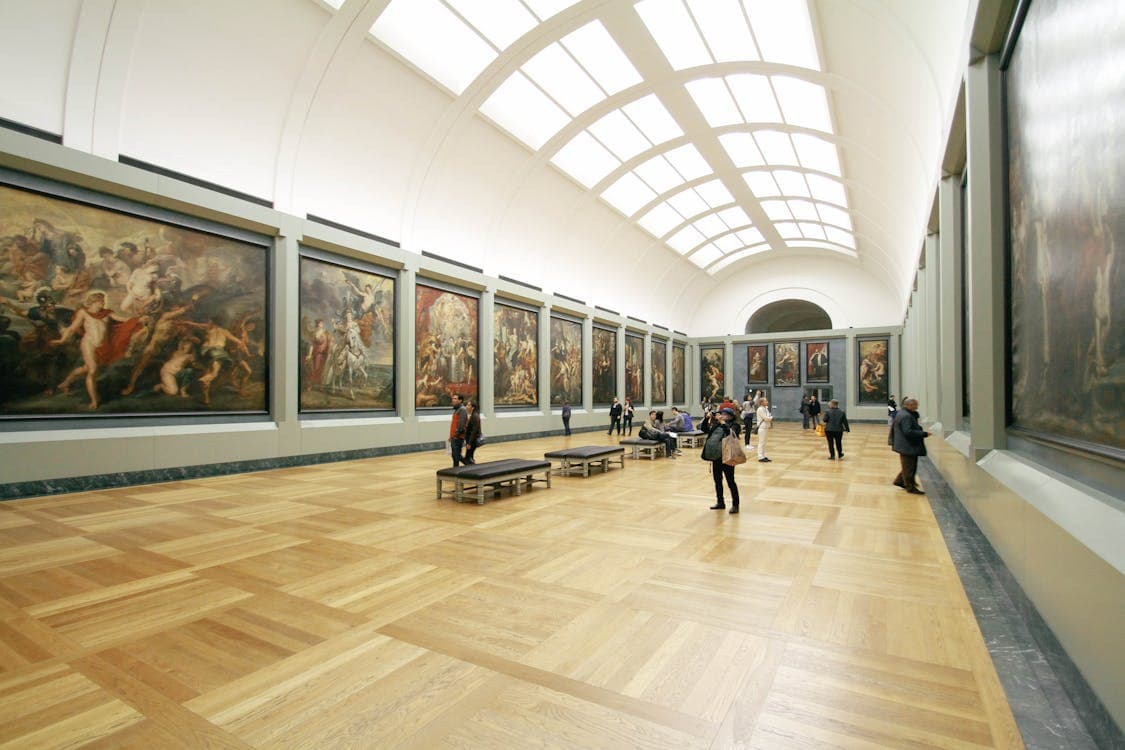
Renaissance-era architecture
A rebirth of art and ideasPexels

Interactive Exploration

Adjust the controls and watch the concepts respond in real time.

Key Concepts

Italian Renaissance Humanism

An intellectual movement originating in 14th-century Italy that emphasized the study of classical Greek and Roman texts (studia humanitatis), celebrated human reason and potential, and promoted secular subjects including rhetoric, history, poetry, and moral philosophy alongside traditional religious learning.

Example: Petrarch (1304-1374), often called the 'Father of Humanism,' collected and studied ancient Roman manuscripts and wrote extensively in both Latin and Italian, modeling his work on Cicero and Virgil.

Northern Renaissance

The spread of Renaissance ideals from Italy to northern Europe (particularly the Low Countries, Germany, France, and England) during the 15th and 16th centuries, characterized by a greater emphasis on Christian humanism, detailed realism in art (especially oil painting), and social criticism through literature.

Example: Desiderius Erasmus of Rotterdam published 'In Praise of Folly' (1509), satirizing clerical abuses and scholastic philosophy while advocating reform through education and a return to scriptural sources.

Gutenberg's Printing Press

Johannes Gutenberg's development of movable-type printing around 1440 in Mainz, Germany, which revolutionized the production of books by making them faster, cheaper, and more widely available, thereby accelerating the spread of Renaissance learning, Reformation theology, and scientific knowledge.

Example: The Gutenberg Bible (c. 1455) was among the first major books printed in Europe using movable type, and within fifty years an estimated 20 million volumes had been printed across the continent.

Martin Luther and the Ninety-Five Theses

In 1517, Martin Luther, an Augustinian monk and theology professor at the University of Wittenberg, posted his Ninety-Five Theses criticizing the sale of indulgences and challenging papal authority on matters of salvation, arguing that justification came through faith alone (sola fide) and that Scripture was the sole authority (sola scriptura).

Example: Luther's theses were quickly translated from Latin into German and printed on Gutenberg-style presses, reaching a wide audience within weeks and sparking public debate across the Holy Roman Empire.

Calvinism and Predestination

The theological system developed by John Calvin in Geneva, centered on the doctrine of predestination (the belief that God has already determined who will be saved and who will be damned), the absolute sovereignty of God, a strict moral code enforced by the consistory, and a Presbyterian form of church governance.

Example: Calvin's 'Institutes of the Christian Religion' (1536) became the most systematic Protestant theological work and influenced Reformed churches across France (Huguenots), Scotland (Presbyterians), the Netherlands, and colonial America (Puritans).

The Counter-Reformation

The Catholic Church's response to the Protestant Reformation, encompassing the Council of Trent (1545-1563), which reaffirmed Catholic doctrine while reforming clerical abuses; the founding of new religious orders such as the Society of Jesus (Jesuits); the Roman Inquisition; and the Index of Forbidden Books.

Example: The Jesuits, founded by Ignatius of Loyola in 1540, became the Church's most effective agents of reform, establishing schools and universities across Europe and sending missionaries to Asia, Africa, and the Americas.

Renaissance Art and Architecture

The artistic revolution of the 15th and 16th centuries characterized by the rediscovery of linear perspective, anatomical accuracy, naturalistic representation, and classical architectural forms. Major innovations included chiaroscuro (light and shadow modeling), sfumato, and the use of oil paints.

Example: Filippo Brunelleschi designed the dome of Florence Cathedral (completed 1436) using an innovative double-shell construction technique inspired by the Roman Pantheon, demonstrating the Renaissance synthesis of classical knowledge and engineering innovation.

The English Reformation

Henry VIII's break with the Roman Catholic Church in 1534, driven primarily by the pope's refusal to annul his marriage to Catherine of Aragon. The Act of Supremacy established the monarch as head of the Church of England, blending political motives with religious change and leading to the dissolution of the monasteries.

Example: The dissolution of the monasteries (1536-1541) transferred roughly one-quarter of England's landed wealth from the Church to the crown and its supporters, fundamentally reshaping English society and landownership.

More terms are available in the glossary.

Explore your way

Choose a different way to engage with this topic โ€” no grading, just richer thinking.

Explore your way โ€” choose one:

Explore with AI โ†’

Concept Map

See how the key ideas connect. Nodes color in as you practice.

Worked Example

Walk through a solved problem step-by-step. Try predicting each step before revealing it.

Adaptive Practice

This is guided practice, not just a quiz. Hints and pacing adjust in real time.

Small steps add up.

What you get while practicing:

  • Math Lens cues for what to look for and what to ignore.
  • Progressive hints (direction, rule, then apply).
  • Targeted feedback when a common misconception appears.

Teach It Back

The best way to know if you understand something: explain it in your own words.

Keep Practicing

More ways to strengthen what you just learned.

Renaissance and Reformation Adaptive Course - Learn with AI Support | PiqCue