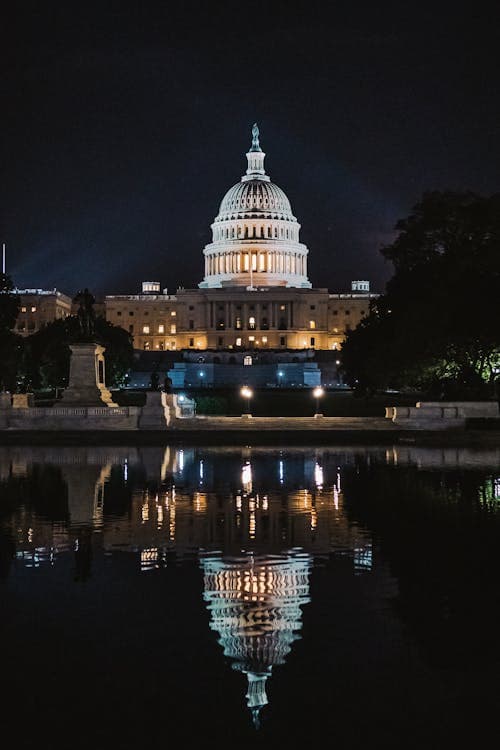
Science Policy
IntermediateScience policy refers to the area of public policy that is concerned with the relationship between science, technology, and government. It encompasses the policies that governments use to fund, regulate, and direct scientific research, as well as the ways in which scientific knowledge informs legislative and executive decision-making. At its core, science policy addresses two complementary questions: what should government do for science (policy for science), and what can science do for government (science for policy). These questions shape how nations allocate research funding, build scientific institutions, train the scientific workforce, and translate discoveries into societal benefits.
The modern science policy landscape traces its origins to World War II and Vannevar Bush's landmark 1945 report, 'Science, The Endless Frontier,' which argued that federal investment in basic research was essential for national security, public health, and economic prosperity. This vision led to the creation of institutions such as the National Science Foundation, the National Institutes of Health expansion, and the broader framework of government-funded research that characterizes industrialized democracies today. Over the decades, science policy has expanded to address issues ranging from nuclear energy regulation and space exploration to climate change mitigation, pandemic preparedness, biotechnology governance, and artificial intelligence oversight.
Contemporary science policy operates at the intersection of multiple disciplines, including political science, economics, philosophy of science, and science and technology studies. Policymakers must navigate tensions between scientific autonomy and public accountability, between short-term political cycles and long-term research timelines, and between national competitiveness and international scientific cooperation. Effective science policy requires not only technical expertise but also an understanding of how scientific evidence is produced, communicated, and contested in democratic societies. As global challenges such as climate change, pandemics, and emerging technologies grow in complexity, the importance of robust science policy frameworks continues to increase.
Practice a little. See where you stand.
Quiz
Reveal what you know — and what needs work
Adaptive Learn
Responds to how you reason, with real-time hints
Flashcards
Build recall through spaced, active review
Cheat Sheet
The essentials at a glance — exam-ready
Glossary
Master the vocabulary that unlocks understanding
Learning Roadmap
A structured path from foundations to mastery
Book
Deep-dive guide with worked examples
Key Concepts
One concept at a time.
Explore your way
Choose a different way to engage with this topic — no grading, just richer thinking.
Explore your way — choose one:
Curriculum alignment— Standards-aligned
Grade level
Learning objectives
- •Evaluate how scientific evidence is translated into policy recommendations through advisory committees, reports, and regulatory processes
- •Analyze the political dynamics of science funding allocation including peer review systems, agency priorities, and congressional oversight
- •Compare international science policy frameworks addressing climate change, biosecurity, and emerging technology governance challenges across nations
- •Identify the tensions between scientific uncertainty, precautionary principles, and economic interests in policy decision-making contexts
Recommended Resources
This page contains affiliate links. We may earn a commission at no extra cost to you.
Books
Science, The Endless Frontier
by Vannevar Bush
The Fifth Risk
by Michael Lewis
The Honest Broker: Making Sense of Science in Policy and Politics
by Roger A. Pielke Jr.
The Entrepreneurial State: Debunking Public vs. Private Sector Myths
by Mariana Mazzucato
Science in a Democratic Society
by Philip Kitcher
Related Topics
Public Policy
The study and practice of how governments identify collective problems, formulate solutions, implement decisions, and evaluate outcomes to serve the public interest.
Political Science
The study of governments, political systems, power dynamics, and public policy, examining how societies organize authority and make collective decisions.
Science, Technology, and Society (STS)
An interdisciplinary field examining how science and technology shape, and are shaped by, social, political, and cultural forces.
Environmental Policy
The study of laws, regulations, and government actions designed to protect the natural environment and manage human impacts on ecosystems and public health.
Bioethics
The study of ethical questions arising from advances in biology, medicine, and biotechnology, guided by principles of autonomy, beneficence, nonmaleficence, and justice.
Technology and Ethics
The interdisciplinary examination of moral questions arising from technology development and use, including AI ethics, data privacy, algorithmic bias, and responsible innovation.
Public Affairs
The interdisciplinary study of government, public policy, and civic engagement, focusing on how public institutions manage resources, deliver services, and address collective challenges.